Most drainage problems are really grading problems
When water pools against a foundation, floods a driveway, or turns a barnyard into a lake every spring, the instinct is to add a drain. Sometimes that's right — but more often, the ground itself is telling water to go the wrong place. Jones EarthWorks fixes drainage at the source: reshaping the grade so water moves away from structures, cutting swales that carry it to a safe outlet, and installing French drains and culverts where surface shaping alone isn't enough.
Every drainage project begins with a walk of the property to read the ground — where water comes from, where it collects, and where it can realistically be directed. On flat eastern Colorado land, the correct solution sometimes involves moving water a considerable distance to find fall. You receive a plan based on your actual property, not a one-size-fits-all drain package.
Drainage work we do
- Swales and drainage ditches cut and shaped to carry water off your property
- French drains for foundations, yards, and low areas that stay wet
- Regrading around homes and outbuildings so water falls away from foundations
- Driveway drainage — crowning, water bars, and culverts where drives cross drainage paths
- Culvert installation to move water under driveways and access points
- Low-spot correction in yards, pastures, and barnyards
Why water problems get worse if you wait
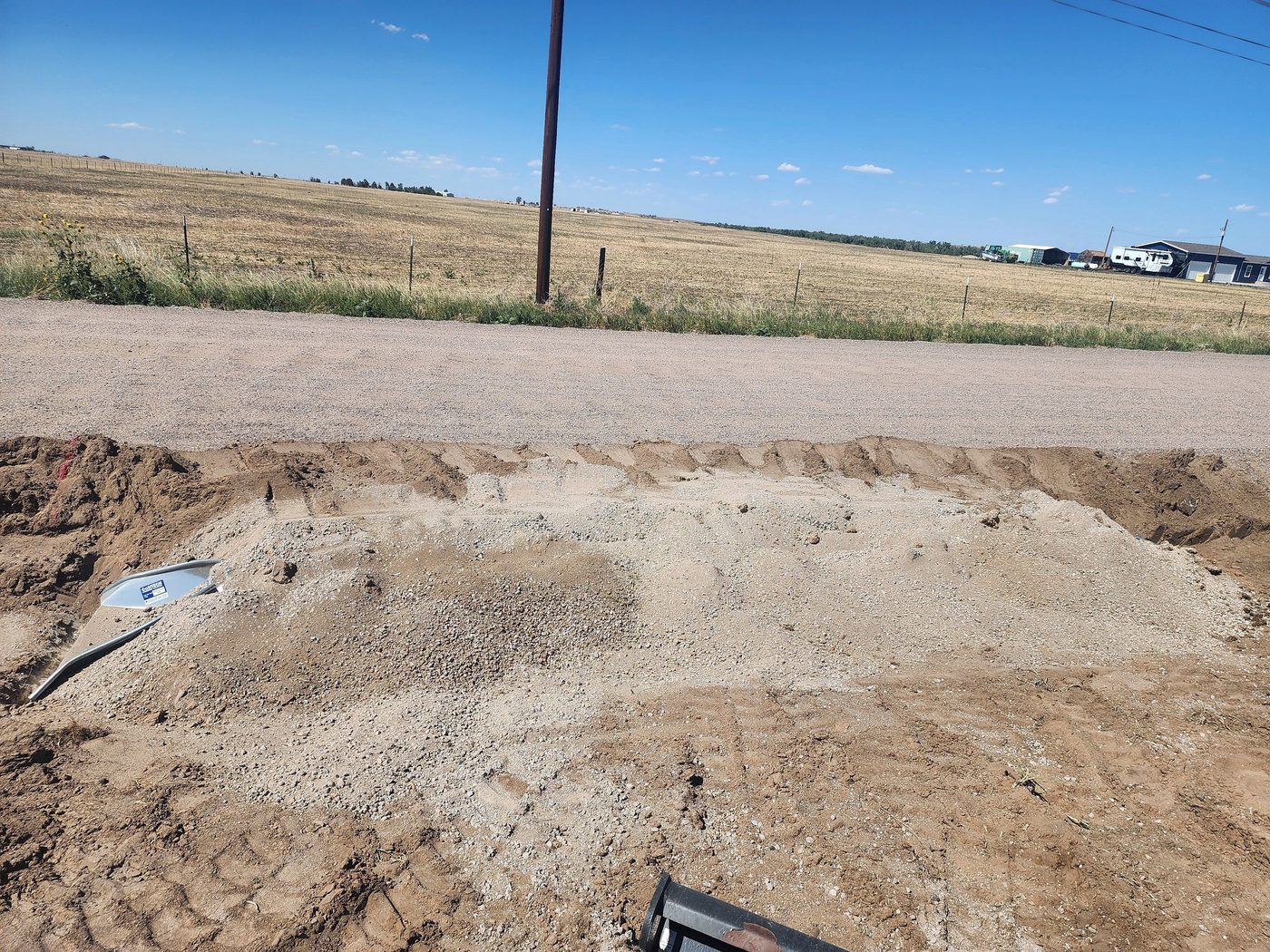
Standing water is never just an eyesore. It softens driveway base until tires rut it out, works into pad edges until buildings settle, keeps septic areas and barnyards saturated, and gives mosquitoes a summer home. In winter, that same water freezes in the wrong places and heaves gravel, concrete, and soil. A drainage fix done once — with the grade corrected and a real outlet for the water — is cheaper than repairing the damage it causes season after season.
Drainage work often overlaps with the rest of what we do: a driveway rebuild that includes proper crowning and a culvert where the swale crosses, or regrading a yard when a new pad goes in. Tell us where the water sits and for how long, and we will walk the property. The same drainage problems recur across Strasburg, Byers, Bennett, and Watkins — we will tell you plainly what will correct yours and what will not.
Common questions
Can you tell where my water is coming from?
Usually, yes. Slope, roof runoff, road ditches, and neighboring ground all leave signs. During the site evaluation, we trace the flow and show you the route the water is taking now — and the route it should take instead.
Do I need a French drain or just regrading?
If the surface can be reshaped to move water, regrading is simpler and has nothing to clog or fail. French drains earn their keep where water comes up from below, where there's no slope to work with, or tight against foundations. The site walk settles which one your property needs.
Will a swale work on flat ground?
Swales need very little fall to work — even a gentle, consistent slope moves water. The key is a continuous path to an outlet. Grades are set with a laser level so the swale drains end to end instead of creating a new pond.
Standing water after every rain?
Request a drainage site walk. We'll trace the water and give you a straight plan for moving it.